Send to subscribers?
This creates a Resend broadcast and sends the email immediately. It can't be un-sent.
Interoperability Wins!
By Yoel Frischoff

Point Solution Integration within Collaborative Data Pipelines
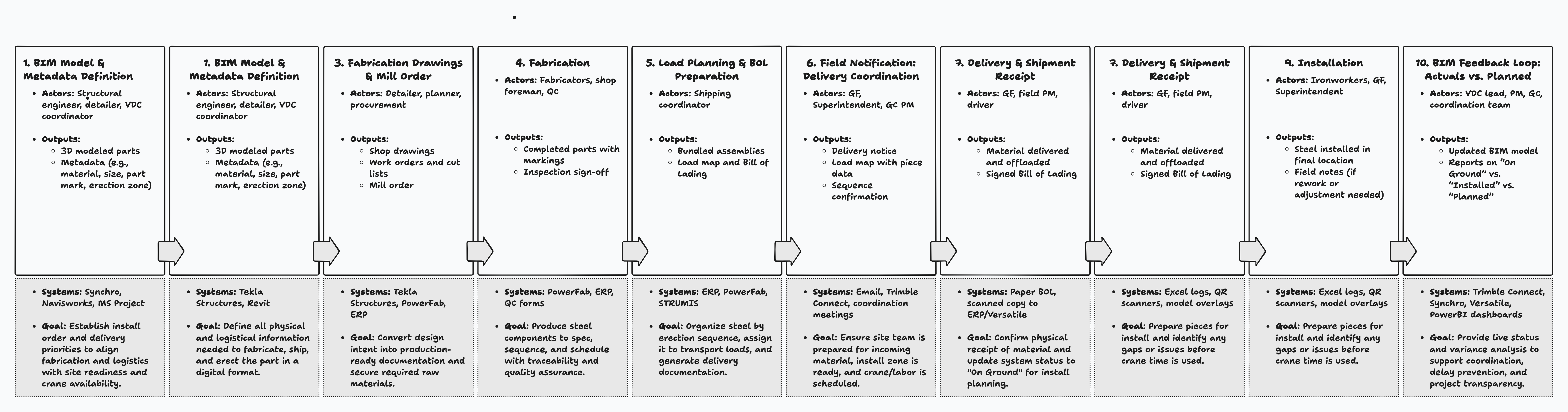
Data flow in the construction industry
Executive Summary
As industries undergo digital transformation, collaborative data environments and open standards are becoming the backbone of modern workflows. Vendors of point-solutions must decide: integrate into these evolving ecosystems or operate independently.
Construction offers a vivid example, where tools like Revizto and Buildots illustrate contrasting approaches to integration, with implications for growth, usability, and adoption. Other sectors - such as pharmaceuticals, automotive, and aviation - demonstrate parallel dynamics. Successful point solutions in these domains grow faster when they align with data pipelines through APIs, open formats, and structured collaboration.
This analysis explores integration strategies across industries, showing how different tools plug into maturing ecosystems, what users gain, and what trade-offs vendors face.
Data Collaboration Platforms Across Industries
Across industries, Common Data Environments (CDEs) and collaborative standards are reshaping workflows. These environments enable shared access, version control, traceability, and automation.
Prominent examples include:
-
Construction: Autodesk Construction Cloud, Trimble Connect, IFC/BCF
-
Pharma: Veeva Vault, HL7, CDISC
-
Aviation: Amadeus, IATA NDC
-
Manufacturing: Siemens Teamcenter, PTC Windchill
In all of these, point solutions that integrate into established data flows gain competitive advantages: interoperability, user trust, and operational continuity.
Interoperability - Benefits to Users
Integrated point solutions offer clear benefits to users:
-
Efficiency: Eliminates redundant data entry and speeds decision-making
-
Transparency: Aligns multiple teams around a shared view of data
-
Compliance: Ensures auditability and traceable handoffs
-
Longevity: Easier upgrades, replacements, and system-wide interoperability
Non-integrated tools may offer strong UX or niche functionality, but face declining adoption as projects scale or data complexity increases.
The Dilemma: Go It Alone or Integrate?
Vendors face a strategic choice:
-
Go solo: Prioritize rapid prototyping and independence
-
Integrate: Build for ecosystem fit and long-term viability
This decision shapes everything from product roadmap to go-to-market strategy.
Pros and Cons for Vendors
Integration Benefits:
-
Better access to enterprise customers
-
Higher product stickiness due to workflow embedding
-
Ecosystem leverage (co-selling, validation)
-
Potential for data-based pricing models
Integration Shortcomings:
-
Slower MVP cycles due to technical complexity
-
Potential lock-in to platform APIs or partner constraints
-
Higher support and maintenance overhead
Cross-Industry Integration Examples
Industry | Platform Standard | Integrated Point Solution | Notes |
Construction | Autodesk/Trimble + IFC | Revizto, Buildots | Coordination + Progress Verification |
Pharma | Veeva Vault + HL7/CDISC | PhlexTMF | TMF automation and compliance |
Aviation | Amadeus + IATA NDC | Hopper | Predictive booking with GDS integration |
Automotive | Siemens/Teamcenter | Altium 365 | Electrical-mechanical collaboration |
These examples show that integration is often the foundation of category leadership. Tools succeed by embedding into the workflows and platforms that define their industries.
Deep Dive: Construction as a Key Example
Stage | Revizto | Buildots |
BIM Modeling | ✅ Pull + Push | — |
Installation | — | ⚠️ Local Display Only |
Feedback Loops | ✅ Pull + Push | ⚠️ Export only |
Revizto
-
Integrates fully with BIM authoring tools (e.g. Revit, Tekla)
-
Supports BCF and IFC for issue resolution
-
Participates as a first-class node in the data pipeline
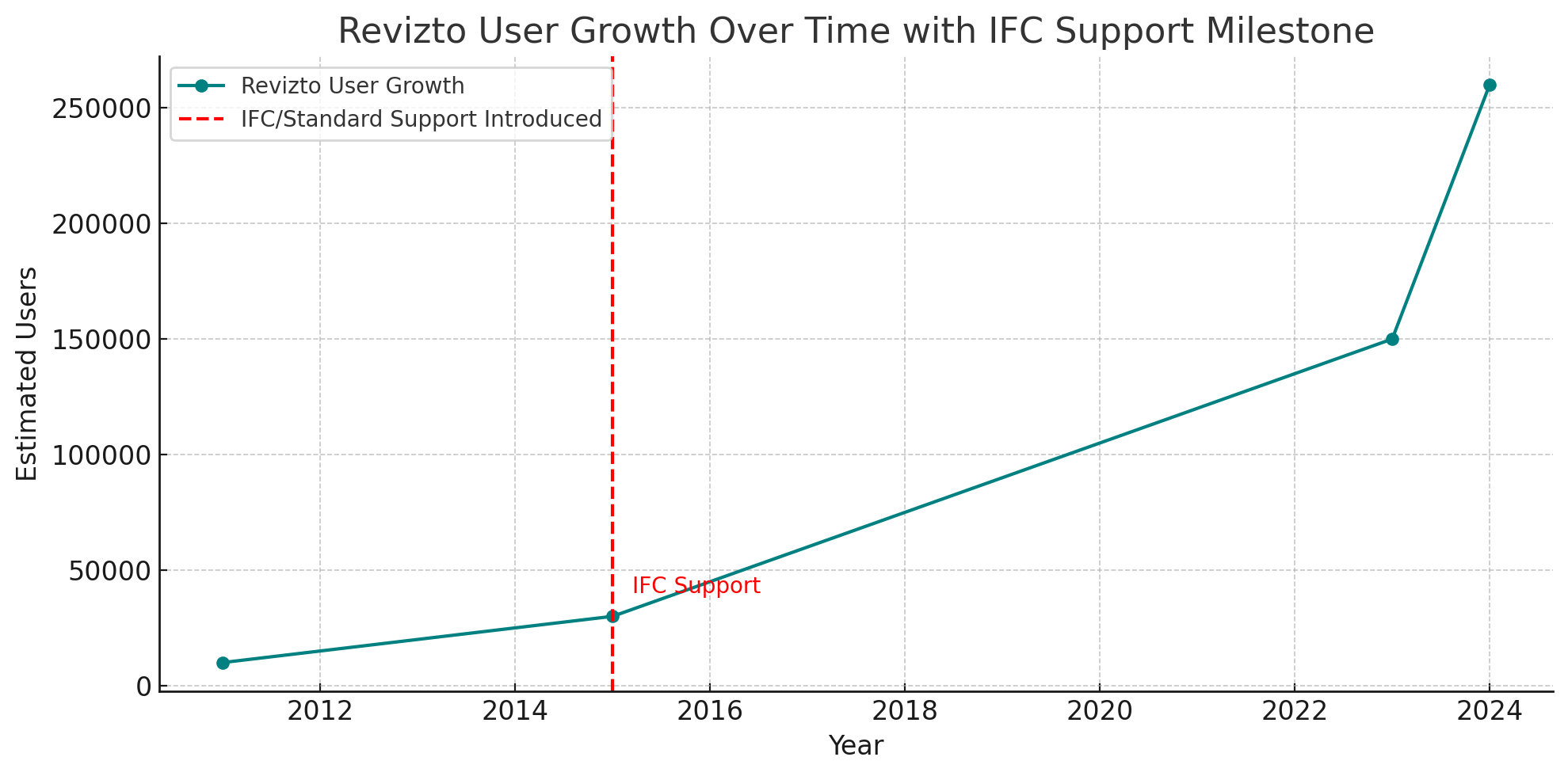
Revizto users after interoperability features
Buildots
-
Ingests BIM and schedules, provides visual tracking
-
Offers exports, but does not integrate back into BIM or CDE
-
Operates adjacent to the data flow, not inside it
Additional Case Studies
PhlexTMF: Pharma
Built to enhance - but not replace - Veeva Vault, PhlexTMF optimized a specific workflow (Trial Master File automation). Through structured exports, API connections, and metadata matching, it gained traction in pharma’s tightly regulated IT environments.
Hopper: Aviation
Rather than build its own infrastructure, Hopper connected to Amadeus, a global travel distribution system. This let it focus on user experience and predictive algorithms while outsourcing complexity. Integration was the enabler of scale.
Conclusion
Across industries, one pattern is clear: products that integrate with the data backbone of their domain gain strategic advantages - not just technical features.
Point solutions that remain disconnected may survive in niche use cases, but those that connect can scale, gain trust, and serve as foundations for more advanced functionality.
Whether you’re building in construction, pharma, or aerospace, the lesson is the same: connect early, align with standards, and earn your place in the pipeline.
Are you building products in need of integration within larger industry context?…